
Young, Connected and Lonely
My generation has never been more connected, and the research says we have never been lonelier. The most hopeful thing I've found isn't online. It's in the generations above us.
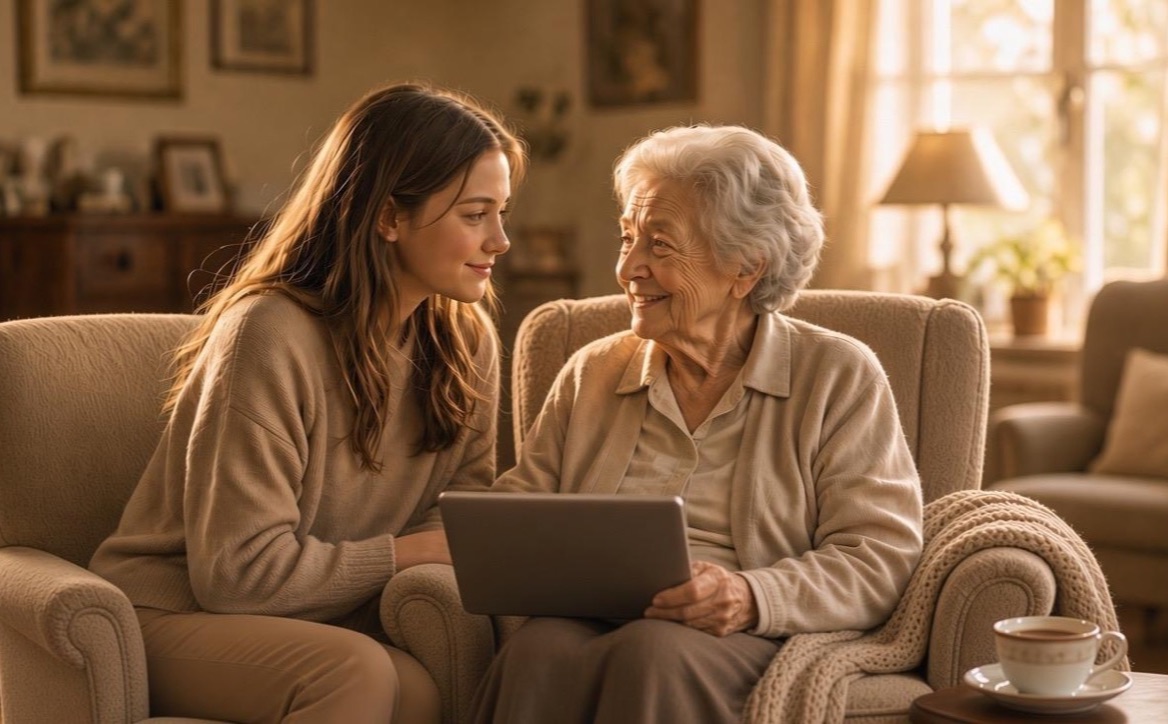
We are the most connected generation there has ever been.
We can message anyone, anywhere, at any time of the day. Most of us carry our whole friendship group around in our pockets.
And yet the research keeps saying the same thing. Young people are lonely. More than any other age group.
When I first read the numbers, I had to read them twice.
What the Numbers Say
In 2025, the World Health Organization’s Commission on Social Connection released a global report on loneliness. It found that about one in six people around the world experience loneliness, with particularly high rates among young people. Among teenagers aged 13 to 17, 20.9% report feeling lonely. (WHO)
Here in Australia, a 2025 report on loneliness in young Australians found that 43% of people aged 15 to 25 feel lonely, and one in seven had felt lonely for at least two years. (Medical Republic)
At the same time, more young people are struggling with their mental health. The Australian Institute of Health and Welfare reports that nearly two in five (39%) young people aged 16 to 24 had experienced a mental disorder in the previous 12 months. (AIHW)
A University of Sydney study published in July 2026 looked at how that has changed. Between 2007 and 2022, the share of 16 to 24 year olds with a mental disorder rose from 23.4% to 36.2%. Anxiety disorders more than doubled, from 12.2% to 29.1%. (University of Sydney)
Those aren’t just statistics to me. They’re my generation.
The Other Lonely Generation
Loneliness isn’t only a young person’s problem.
On the other side of the age gap, up to one in three older adults are socially isolated. We’ve gathered these numbers, and where they come from, on our Combating Loneliness page.
Two groups who are lonely, often living only a few streets apart. Each has something the other is missing.
Four Year Olds in an Aged Care Home
In 2019, the ABC aired Old People’s Home for 4 Year Olds. It brought a group of preschoolers into a retirement community to spend time with the older people living there.
The idea came from a UK series of the same name. In the original, ten four year olds and eleven residents in their late 80s spent six weeks together in a nursery set up inside a retirement community. The team behind it measured the residents’ mood and physical health at the start, halfway through and at the end. (The Conversation)
By the end, 80% of the residents had improved on a test of how well they could stand up and walk. Most were more active. Nearly all of them had been depressed at the start. After six weeks, none of them registered as depressed.
The team was honest that this wasn’t a scientific trial. It was a small social experiment with a handful of people. But the change they describe is hard to ignore.
Students Who Live With Older Residents
In the Netherlands, the Humanitas nursing home in Deventer had an idea that has since spread around the world. University students live there rent free. In return, they spend 30 hours a month with the older residents, acting as neighbours and sharing new skills like emailing and social media. (The Conversation)
Sydney has its own version. Since 2018, Scalabrini Bexley in Sydney’s south has offered four allied health students from the University of Sydney free accommodation and meals, in exchange for 30 hours a month of conversation and friendship. (ABC News)
The students aren’t there as carers. They’re there as friends.
One resident told the ABC, “I mix with young people to stay young.”
Purpose Works Both Ways
What stands out to me in all of this is that nobody is doing anyone a favour.
The older residents get company, someone to share their stories with, and a reason to look forward to the next visit. The young people get something too. A sense of being needed. Someone who has lived through more than they can imagine, and who is genuinely interested in them.
There is a whole field built around this idea. Recently I met with the Australian Institute for Intergenerational Practice (AIIP), whose team developed a global standard and framework for bringing young and old together. (Griffith University)
Questions Each Generation Could Ask the Other
A conversation between generations doesn’t have to be one-sided. The questions can go both ways.
For a young person to ask an older one
- Who did you turn to when you felt lonely at my age?
- How did you stay in touch with your friends before mobile phones?
- What’s the best piece of advice anyone gave you when you were my age?
- What’s something you did when you were young that would surprise me?
- What do you wish someone had asked you when you were young?
For an older person to ask a young one
- What does an ordinary day look like for you?
- What’s something you’re excited about right now?
- What’s the hardest part about being your age today?
- Can you show me something you love doing online?
- What do you want to be doing ten years from now?
Why We Built FromBeyond.co
This is a big part of why FromBeyond.co exists.
The idea came to life after I visited my grandma overseas. She had so many fascinating stories and so many funny jokes, and I wanted to capture them all.
Through our Grand Friends interviews, I’ve seen it again and again. When a young person sits down with an older one and asks about their life, both of them walk away with something.
FromBeyond.co gives those conversations a reason to happen and a way to keep them. Questions to ask. A way to record the answers. A safe place to keep them for the people who will want them most.
Loneliness in young people is a real problem. So is loneliness in older people. Maybe part of the answer is letting them find each other.
Alice Footer, Co-Founder of FromBeyond.co
FromBeyond.co helps you capture and preserve the stories that matter most, before time runs out.
More questions to share between generations
From the FromBeyond.co question picker, for a young person to ask an older friend or relative.
What did you get up to for fun as a kid, and who was usually with you?
What were you like as a teenager, and what did you get into trouble for?
Who were you closest to growing up, whether a brother, sister, cousin or best friend? What's a story about the two of you that still makes you smile?
What was the hardest time you went through, and what got you through it?
What matters most to you in life, and where did that come from?
Preserve the stories that matter
Create a video keepsake for someone you love, delivered at exactly the right moment.
Get StartedShare this article